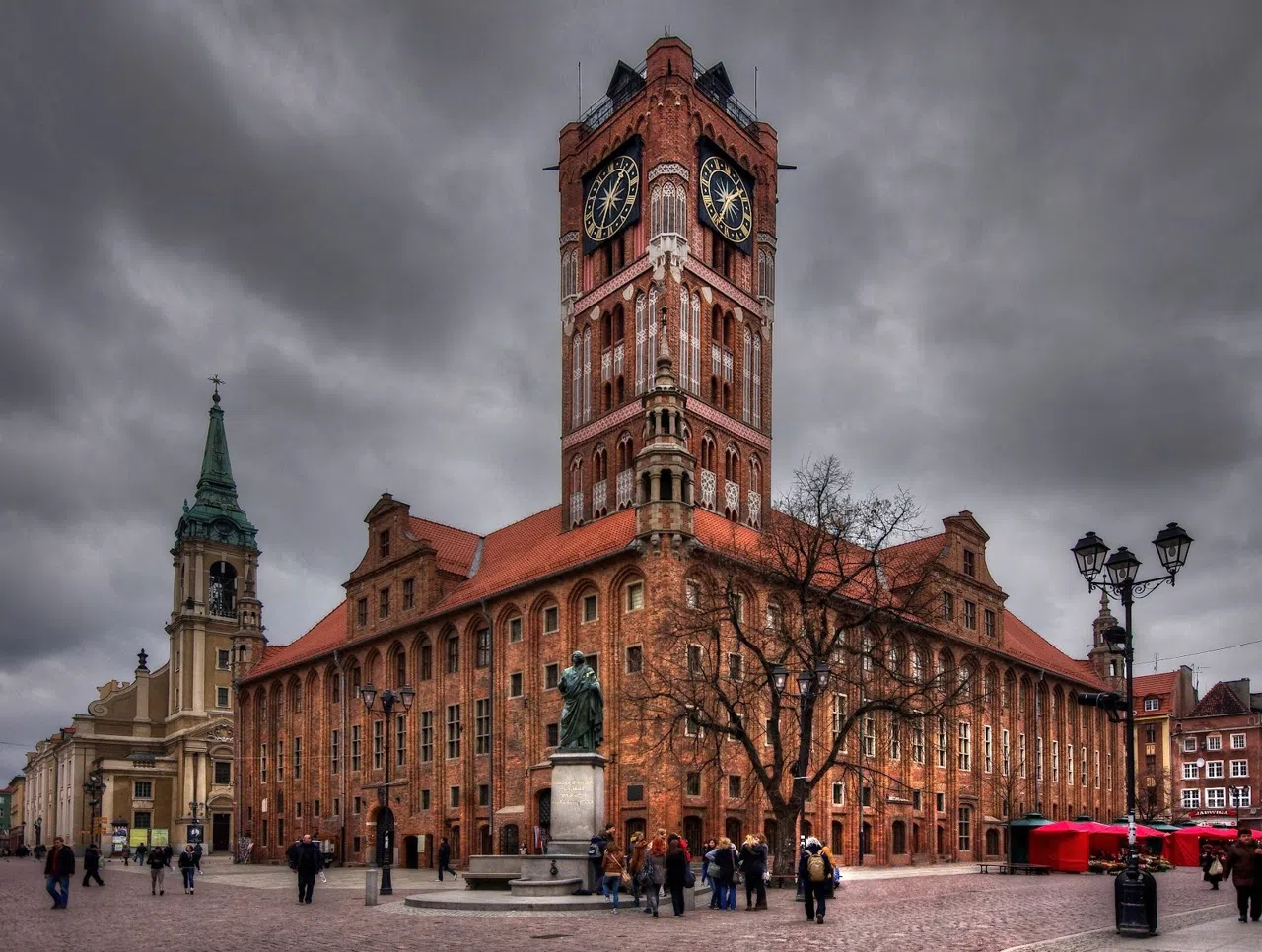

Toruń came through the war that flattened most of Poland's other medieval centres with its brick intact, and the difference registers the moment you step onto the Rynek Staromiejski. Nothing here is a polite reconstruction. The gables lean, the mortar is patched in five centuries of different colours, and one tower on the old wall line is visibly falling over. The whole Gothic core is barely a kilometre across, which makes the best walk in the region also one of the shortest.
The town the Order built and the townspeople unbuilt
The Teutonic Knights founded Toruń in 1233 as a bridgehead on the Vistula, and the merchants who followed them got rich on river trade. There is no building stone in this flat, sandy landscape, so they built in brick, which is why Toruń is dark red rather than grey, and why its Gothic reads as mercantile rather than aristocratic. The relationship between the town and its founders soured over two centuries, and in 1454 the townspeople dismantled the castle themselves. Nicolaus Copernicus was born here in 1473 into that merchant world. Afterwards the town slid into provincial quiet for a very long time, which is the unglamorous reason so much of it still stands.
A walk here is not a themed loop laid over a modern street plan. It is the medieval street plan. Everything below sits within about fifteen minutes' walking of everything else, and the order that follows is the order the streets actually suggest: square first, then down towards the river, then east to the ruins.
Starting on the Rynek Staromiejski
The Old Town Hall (Ratusz Staromiejski) on the Old Town square is the anchor, a squat brick block sitting in the middle of the Rynek rather than politely at its edge. Climb its tower and the shape of the town finally makes sense. The exhibition hall costs 30 zł, reduced 25 zł; the tower is a separate 28 zł, reduced 24 zł. The staircase is single-file and 175 steps, so entry is metered and larger groups get split and timed, worth knowing if you arrive with a coach party. Permanent exhibitions are free on Wednesdays. Two scheduling traps: the hall closes on Mondays, and from October to April it shuts at 16:00, though the tower stays open daily.
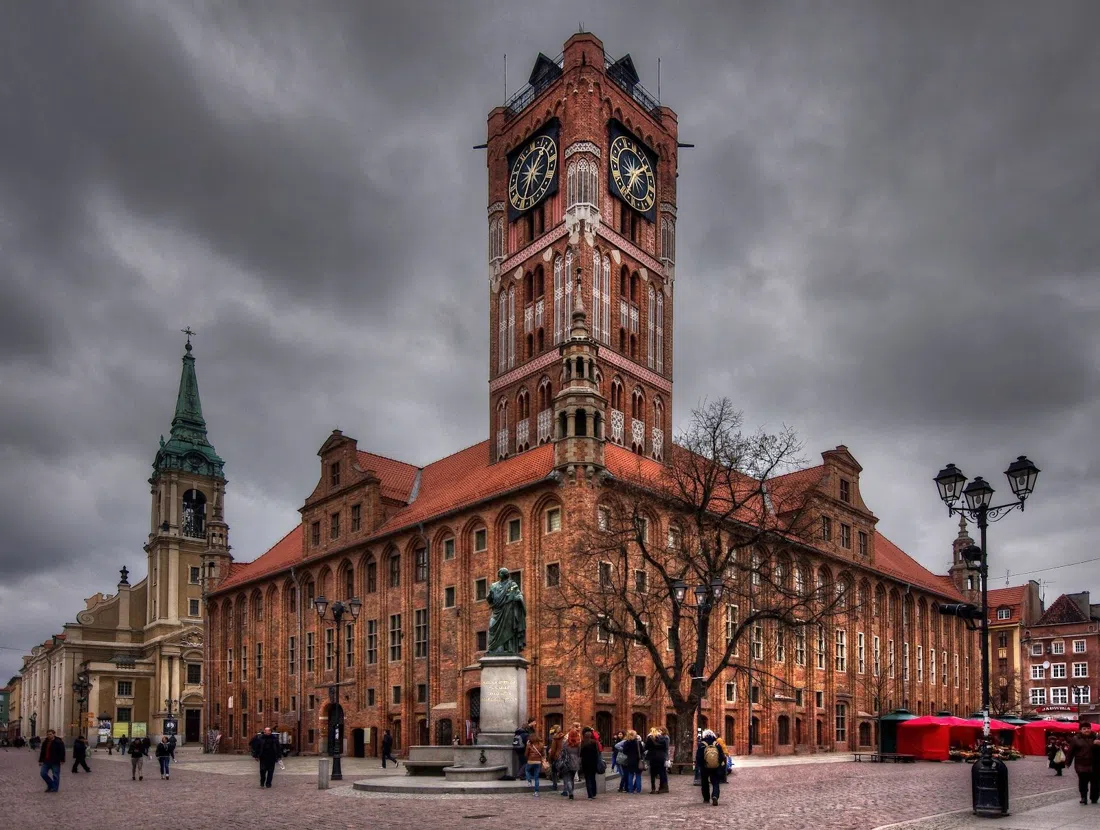
Artus Court (Dwór Artusa) has the grandest frontage on the Old Town square. It is the successor to the medieval merchants' hall of the same name, and the building most visitors photograph without getting inside. The interior only opens on scheduled guided dates with limited places, priced at 18 zł, reduced 12 zł, and groups must book. If the dates don't line up, the glazed courtyard café takes walk-ins and costs nothing to enter; it is the reliable way to see the inside of the building at all.
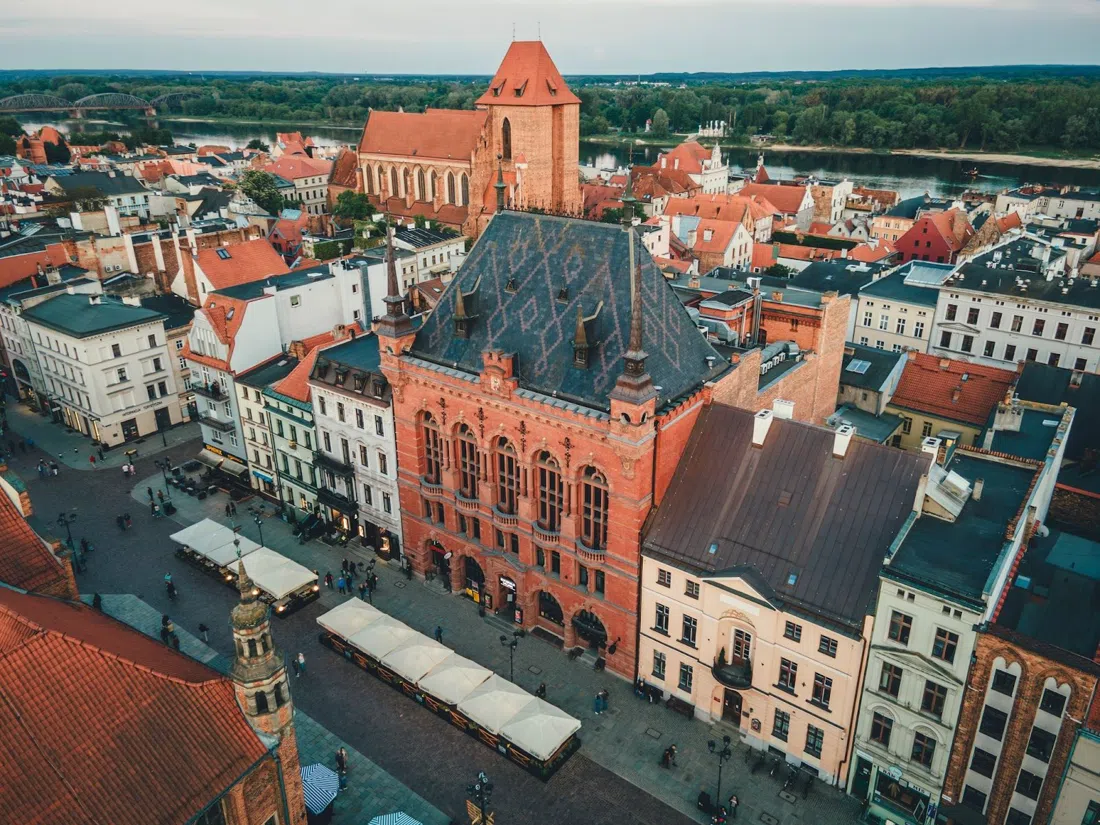
A few doors along, the Museum of Asian Art – Star House (Muzeum Sztuki Azji, Kamienica pod Gwiazdą) reopened on the same square on 10 April 2026 after a façade restoration and a complete redisplay. It is now billed as the Museum of Asian Art rather than under its old 'Far Eastern Art' name, with 405 objects across three floors, and tickets sit in the standard District Museum band, roughly 25 to 31 zł at full price. The historic spiral staircase and small floors mean groups move through in sections rather than as one body. The pleasure here is double: a genuinely good collection, inside one of the most ornate burgher houses on the square.
Down Kopernika to the astronomer's house
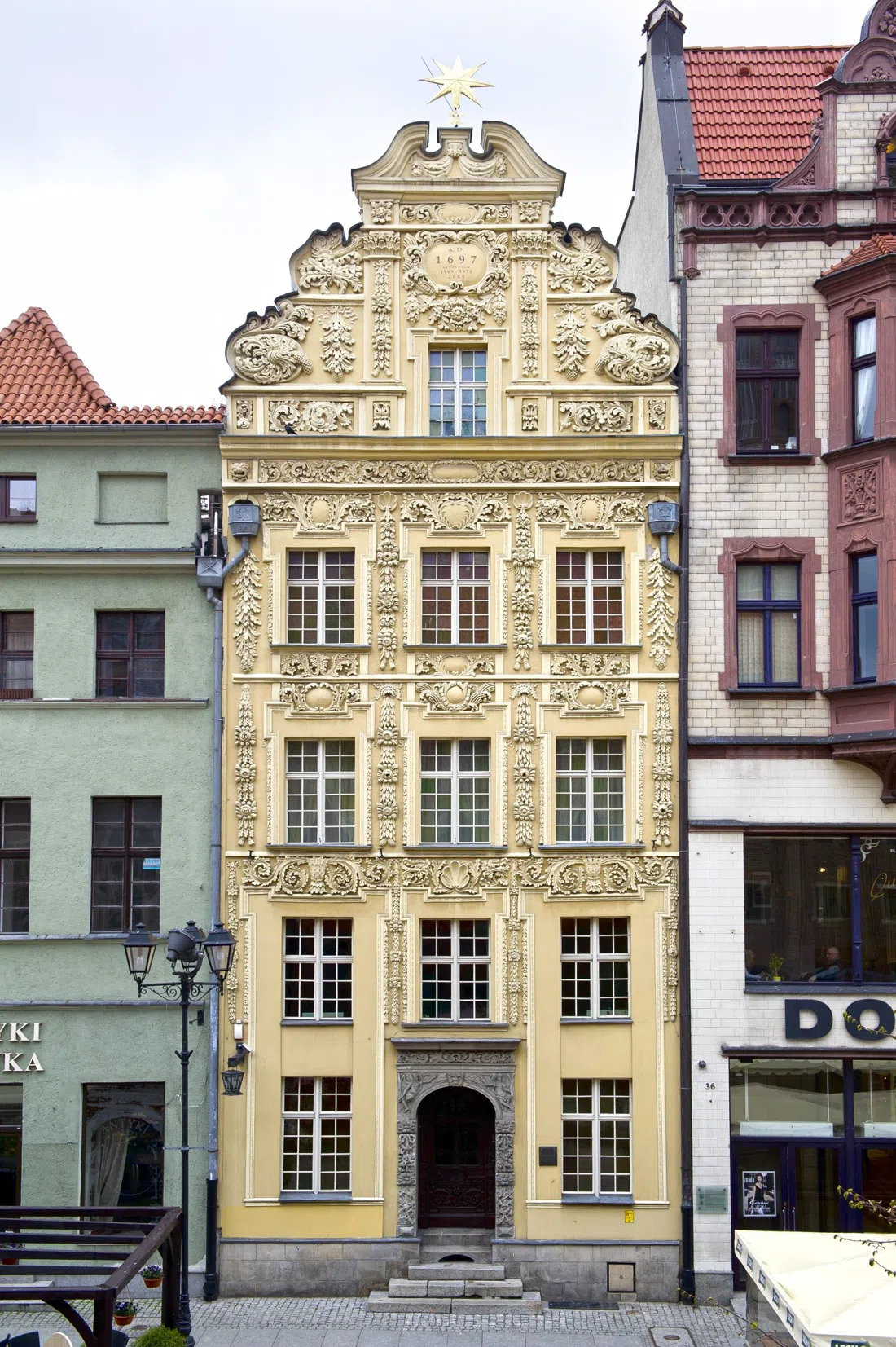
Most routes bend south down ulica Kopernika for one reason. The House of Nicolaus Copernicus (Dom Mikołaja Kopernika), in the Old Town, is the astronomer's presumed birth house, and the museum inside costs 31 zł, reduced 26 zł, with free entry on Thursdays. The 3D film is an extra 29 zł, and English screenings must be pre-booked by email to [email protected]; walk in without that arrangement and you will usually sit through a Polish narration. The period rooms are narrow, so entry is staggered. It moves slowly when it is busy, and that is the building's doing, not bad management.
Two churches doing opposite jobs
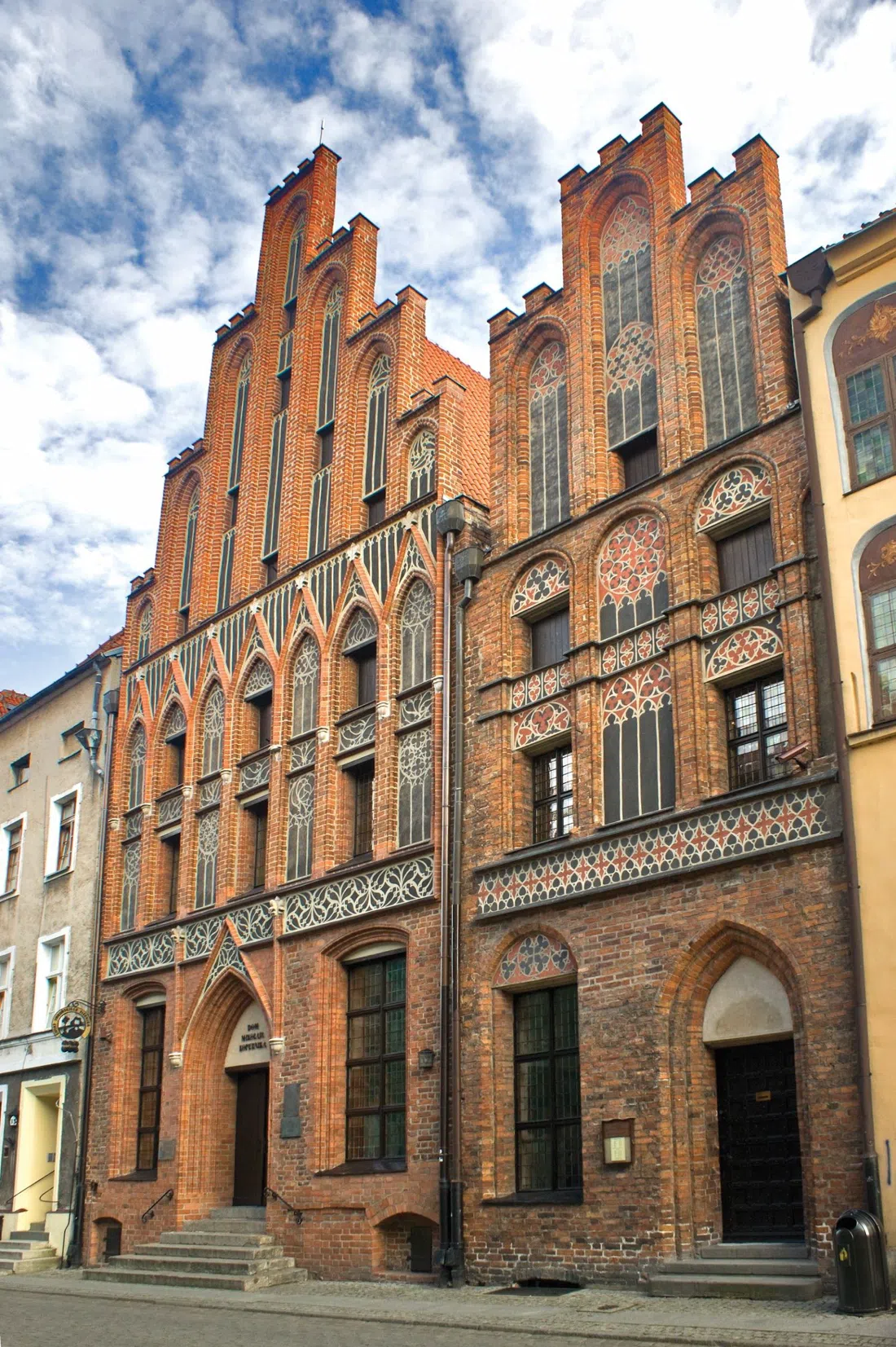
St Mary's Church (Kościół Wniebowzięcia Najświętszej Marii Panny), in the Old Town, is the one to walk into without a plan. It is a towerless Gothic hall church, meaning the naves rise to equal height, and the effect from inside is of a far larger building than the street frontage promises. Entry is free or by donation, groups are welcome outside Mass times, and guides are asked to keep commentary quiet and to stop during services. It is the most atmospheric free interior on the route by a distance.
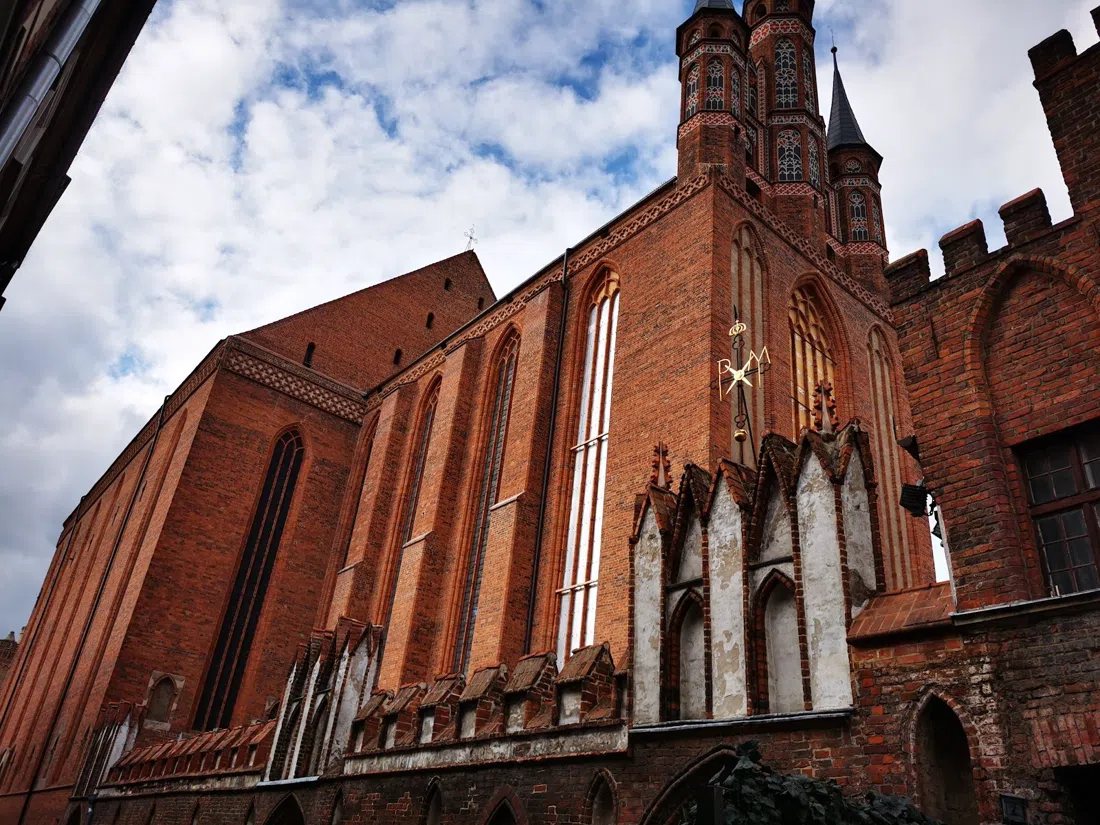
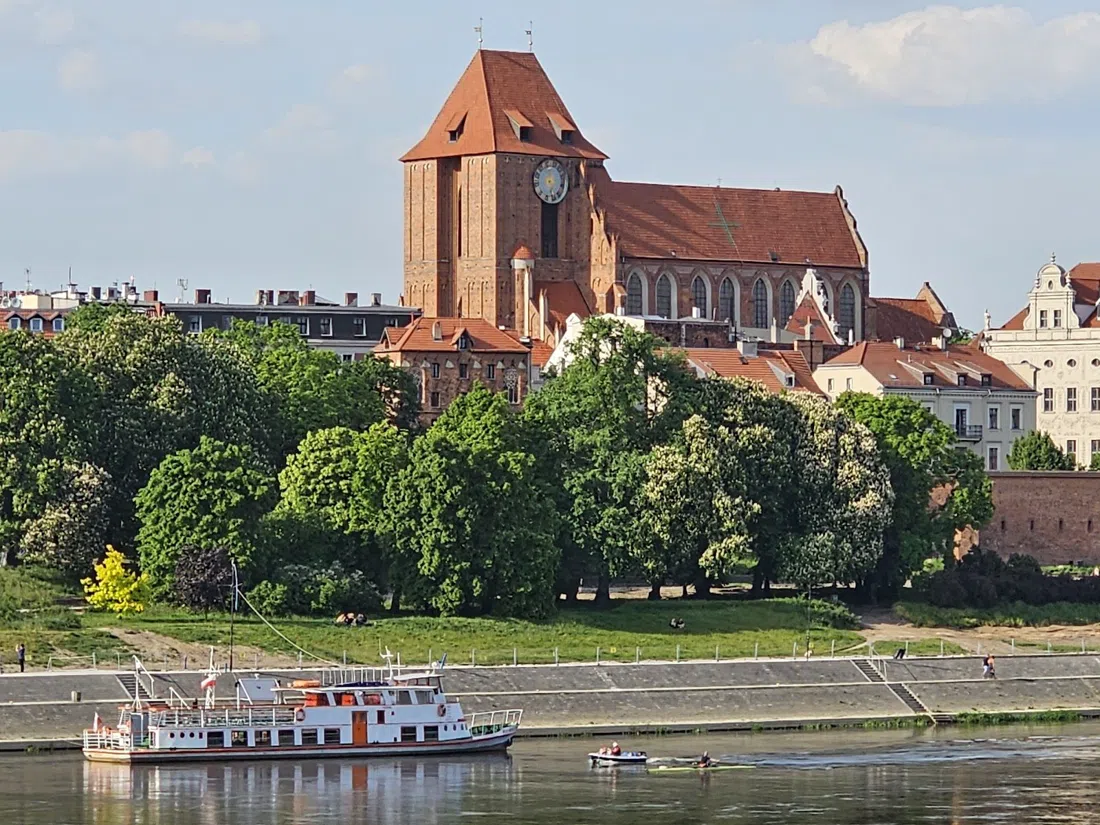
The Cathedral of St John the Baptist and St John the Evangelist, in the Old Town towards the river, is the heavier, statelier counterpart. It holds Tuba Dei, the largest Gothic bell in Poland, and a 52-metre tower with over 200 steps up to the best combined view of the river and the roofs. Church entry is a small donation or ticket; the tower runs roughly 15 to 25 zł at full price, less reduced. The tower season is roughly April to October, the stair is narrow and one-way so large groups are metered, and it closes during services. On Sundays it opens late, at 14:00.
The tilt on the wall line
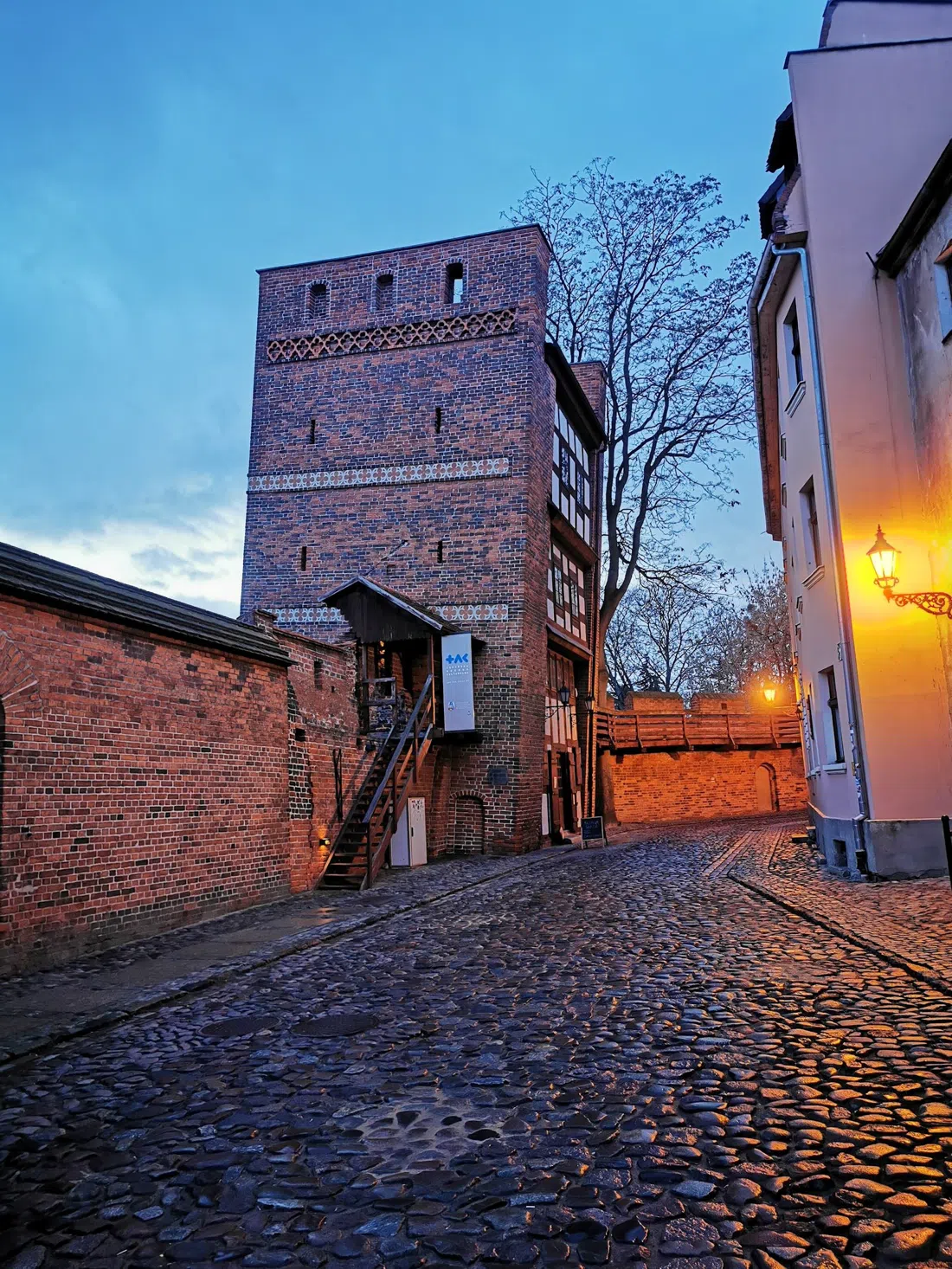
The Leaning Tower (Krzywa Wieża), in the Old Town on the line of the medieval walls, is where every guided group stops for the honesty test: back to the wall, heels touching, arms out. The tilt is medieval subsidence in soft ground, not a legend, and it is free to look at from any angle with any number of people. The café inside is tiny and seats only a handful at a time, with drinks around 12 to 25 zł and a Toruń gingerbread served alongside the coffee. Couples get the better end of this one; groups should admire it from outside.
Where the Teutonic story becomes physical
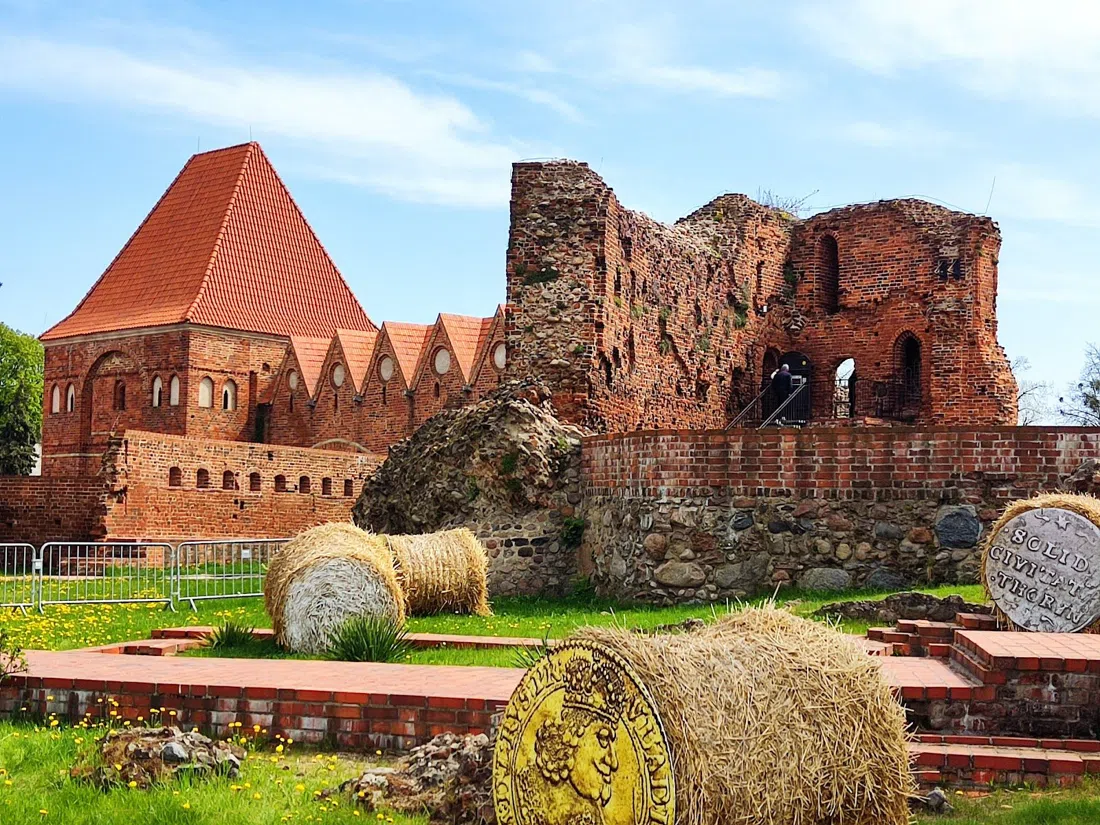
The Ruins of the Teutonic Castle (Ruiny Zamku Krzyżackiego), between the Old and New Town, are the part of the walk that makes the history concrete rather than decorative. This is what the townspeople pulled down in 1454 and never allowed to be rebuilt: low walls, exposed foundations, vaulted cellars, and the one tower left standing, the gdanisko, reached by its own bridge. Entry is around 25 zł, 15 zł for children, and under-3s are free. It opens daily 10:00 to 18:00. The open-air site absorbs large numbers easily; the cellars and exhibition rooms are much tighter, so a group that arrives together will end up filtering through.
The gingerbread trade, in two museums
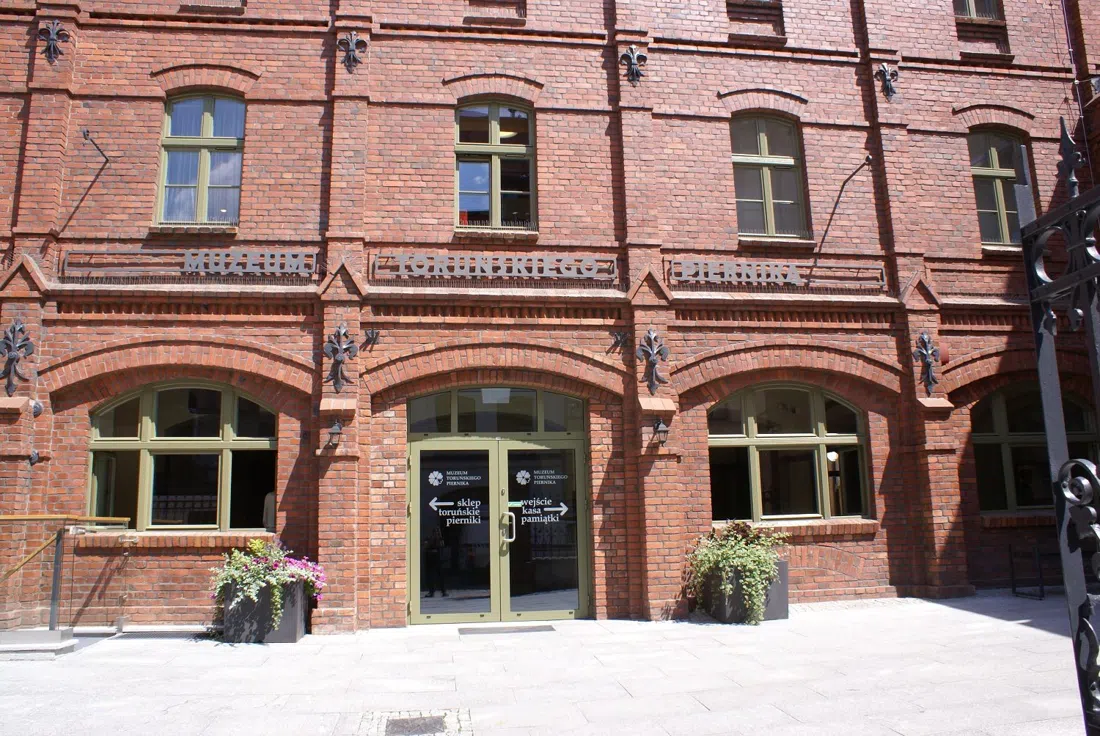
Toruń's gingerbread is a guild trade with centuries of records behind it, and two separate museums tell the two halves of the story. The Museum of Toruń Gingerbread (Muzeum Toruńskiego Piernika), five minutes off the square in the Old Town, occupies Europe's oldest surviving gingerbread works and covers the industrial side: ovens, moulds, the economics of a spice trade this far north. The exhibition is 31 zł, reduced 26 zł, a workshop is 31 zł, and a combined ticket is 49 zł; permanent exhibitions are free on Tuesdays. Workshops run in fixed timed slots, so groups must book ahead. It is markedly quieter than anything on the market square.
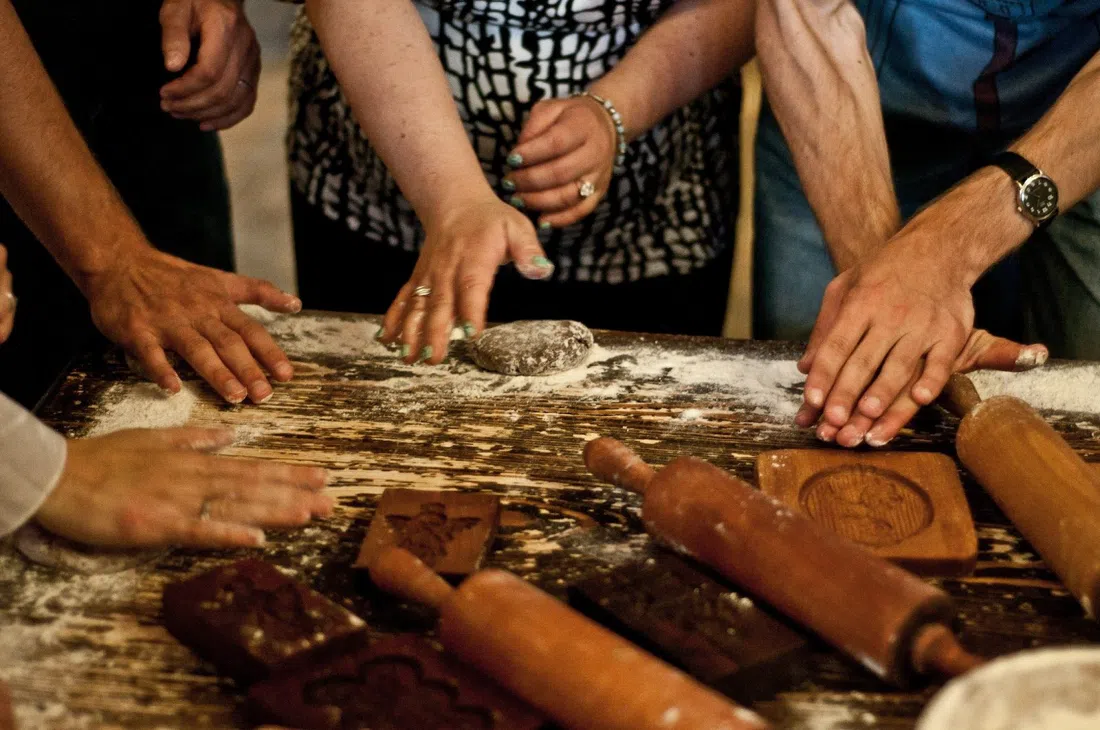
The Living Museum of Gingerbread (Żywe Muzeum Piernika), also in the Old Town, is the hands-on counterpart: a 75-minute costumed show where you mix, roll and stamp your own. Adults pay 42 zł, students and seniors 37 zł, under-3s free. It handles up to 75 people at once with advance reservation, and gives one free leader ticket per 15 participants, which makes it the most group-friendly indoor stop in the city. One caveat for independent travellers: only the 14:00 slot is reliably bilingual in English and Polish. If it rains mid-walk, this is the hour to spend.
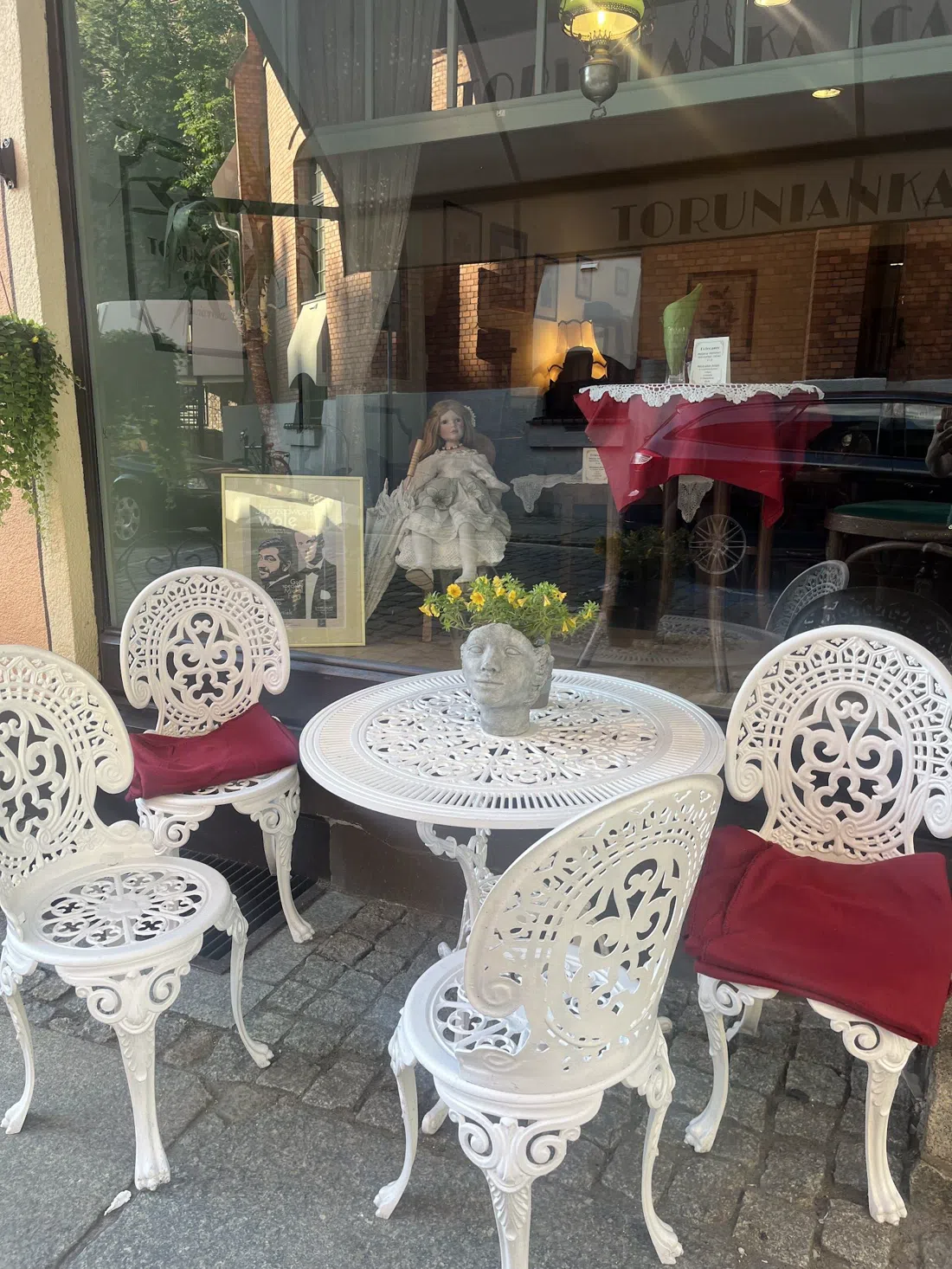
For something smaller, Torunianka Café, in the Old Town, treats gingerbread as a drink rather than a box to carry home: gingerbread coffee, cocoa and ale, with coffee and cake around 15 to 30 zł. The room is small, fine for two or three without booking and hopeless for a coach.
The Copernicus payoff under a gasholder dome
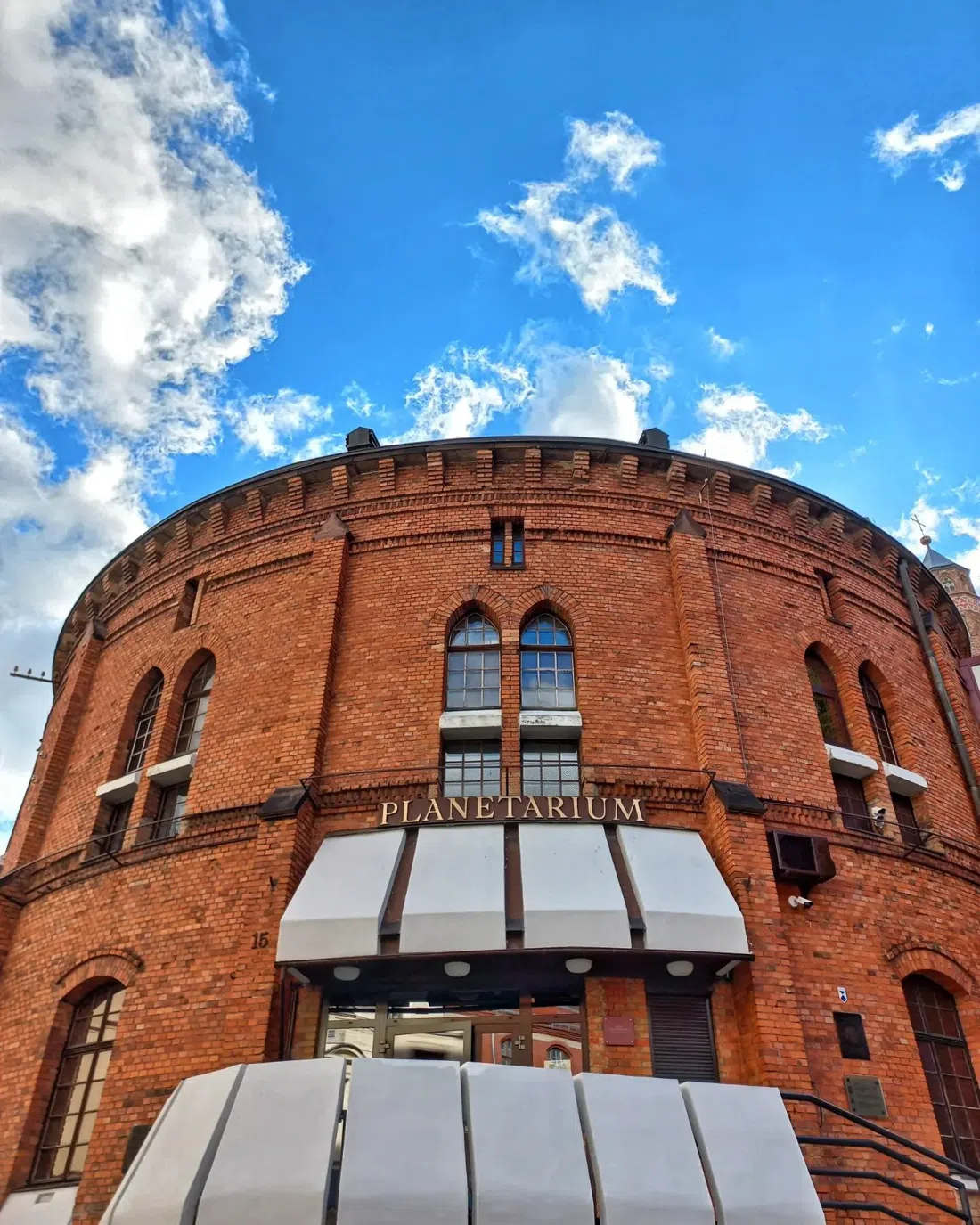
The Toruń Planetarium (Planetarium im. Władysława Dziewulskiego) occupies a converted 19th-century gasholder in the Old Town, and it is the logical end to a Copernicus walk. Shows are 18 zł on weekdays and 20 zł at weekends; the English-language version with headphones is 23 to 25 zł, and the interactive halls are a further 8 zł. Book the headphone version unless you want Polish narration. Individual online booking is capped at six seats and opens seven days ahead; groups use the dedicated reservation line on 56 622 60 66.
Cross the river for the picture you came for
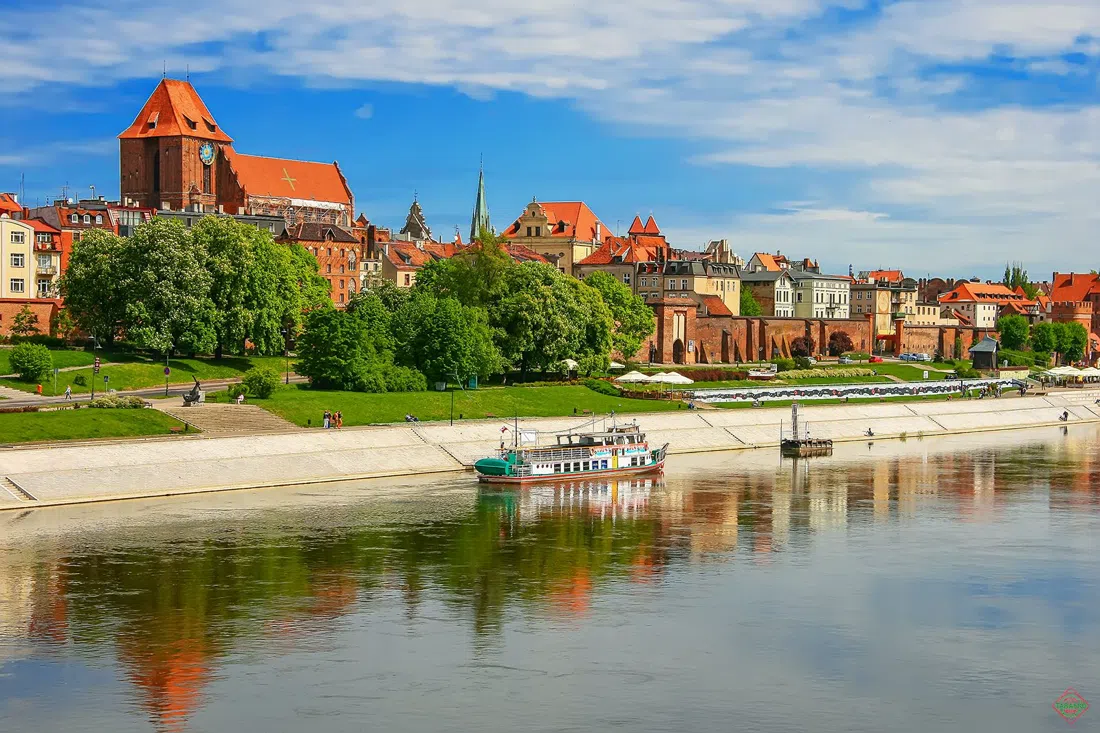
The defining view of Toruń is not from inside it. Kępa Bazarowa viewpoint, on the far bank of the Vistula opposite the Old Town, is a free open-air terrace on a nature reserve island, reached on foot across the road bridge in about 20 to 25 minutes from the square. From there the whole Gothic waterfront lines up: walls, church towers, roofs. Go close to sunset, when the walls are floodlit. The deck itself is modest, so larger groups rotate through it rather than standing on it together.
Guide, audio route, or your own feet
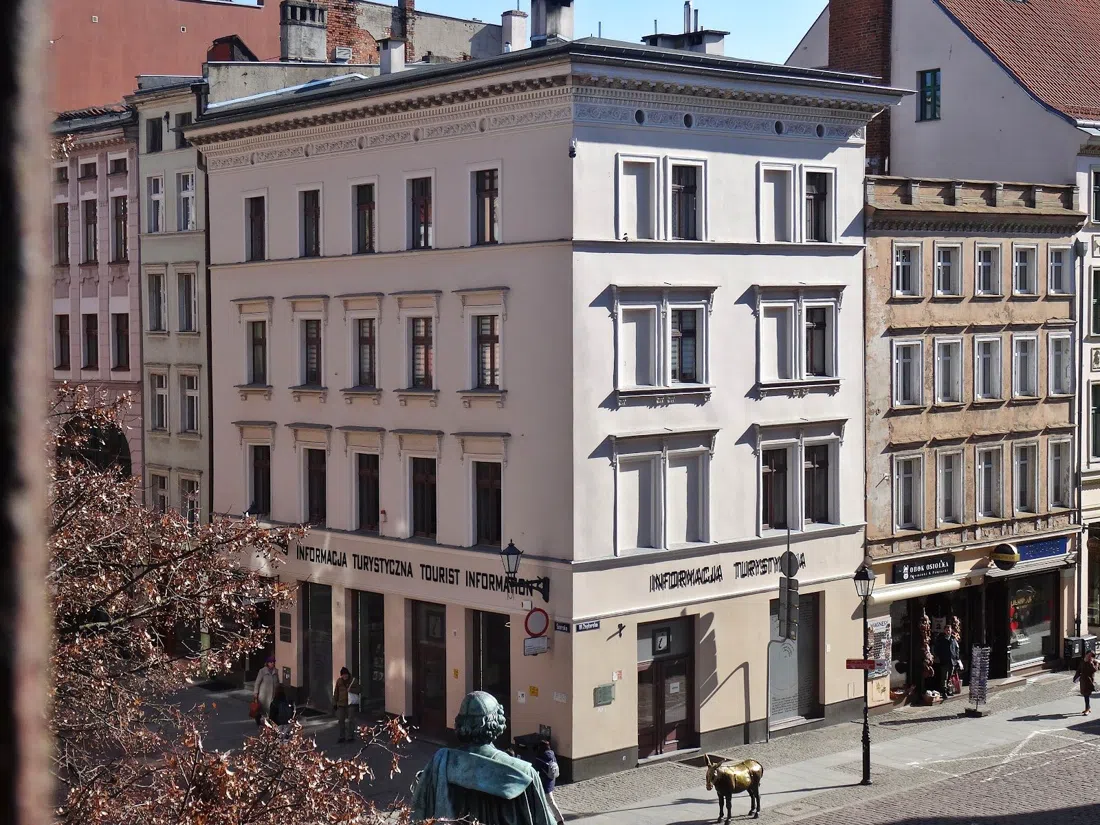
The Toruń Tourist Information Centre (Ośrodek Informacji Turystycznej), in the Old Town, is the honest answer to whether you need a guide. It books licensed municipal guides, hands out free maps, offers a downloadable audio route, and stores bags at 15 zł per item per day. Opening is 10:00 to 17:00 daily from April to October, and Monday to Saturday in winter. Licensed guided walks run at weekends and on public holidays; guide fees are quoted on request.
Private guided walks of the medieval town are also bookable in advance. The practical argument for one is not access, since nothing on this route requires a guide to get in; it is sequencing, and commentary in your own language. Those guided walks run seven days a week, and prices start from 180 USD per person, which is a serious premium over the roughly 130 zł of door tickets a thorough self-guided day costs. The reviews are strong: 46 traveller reviews across the bookable options here, with the top-rated walk at 5.0 out of 5. Book ahead if you want a specific language or a fixed start time; otherwise the audio route and a tower ticket will do the job.
Where to stop and eat on the route
Manekin, on the Rynek Staromiejski, is the city's best-known cheap feed, a crêperie with pancakes around 20 to 35 zł, open until 23:00 and right on the square. It is walk-in only for small parties and demand routinely outruns the tables; the queue peaks 13:00 to 15:00 and again from 18:00, so eat either side of that or use the second branch on ulica Wysoka. Larger groups should reserve.
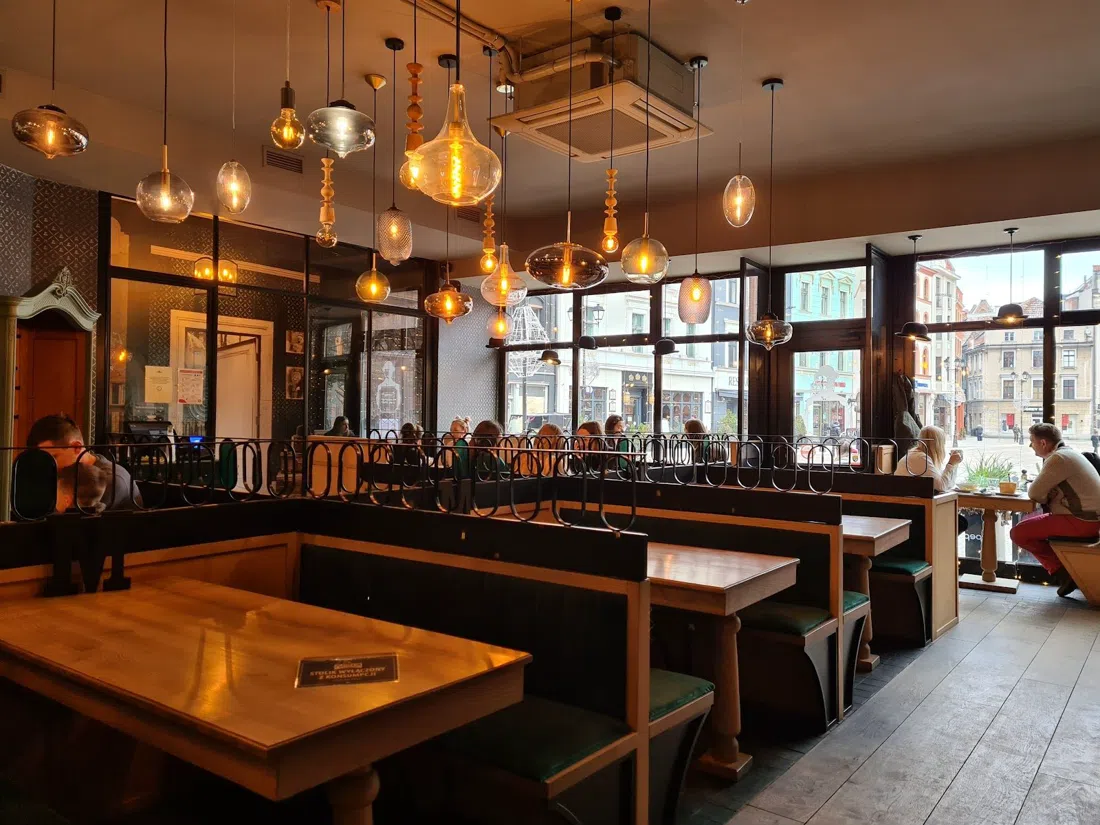
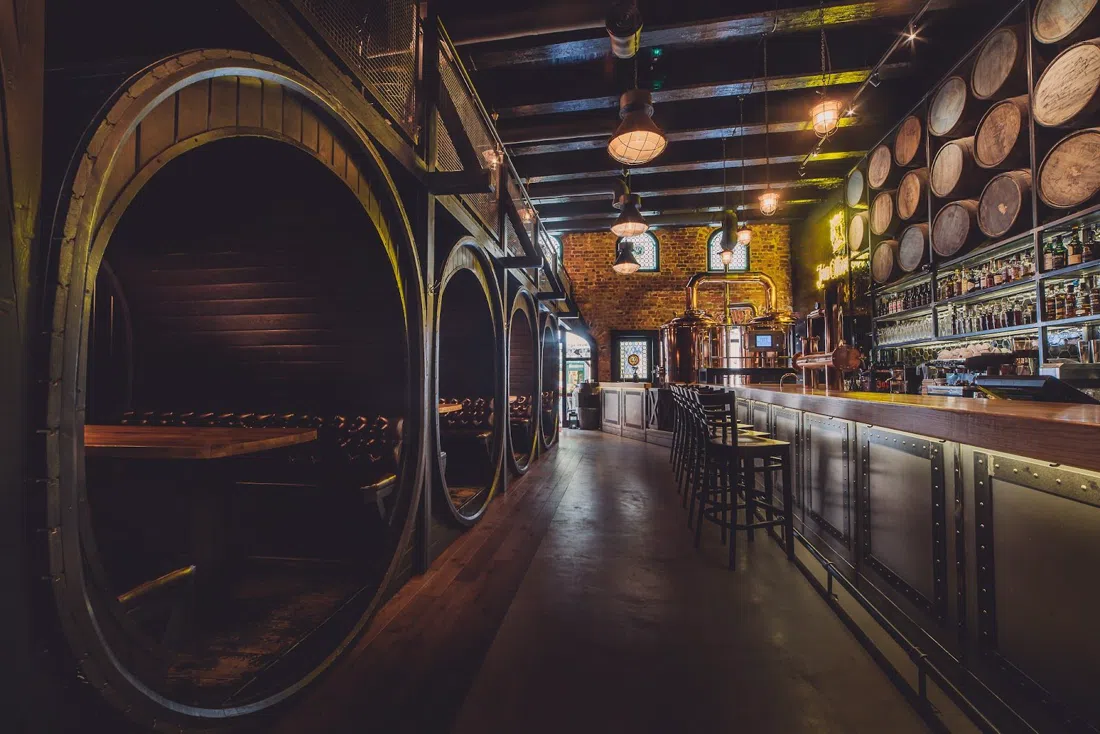
Jan Olbracht Old Town Brewery (Jan Olbracht Browar Staromiejski), in the Old Town inside the walls, is the only working brewery within the medieval circuit, with the kit visible from the tables and a gingerbread beer that ties the city's two obsessions together. Beer runs roughly 16 to 24 zł and mains 45 to 80 zł. It opens at 13:00 Monday to Thursday, so plan it as the end of the walk rather than the lunch stop. Three air-conditioned function rooms take 20 to 100 people, reserved at [email protected].
Is it worth it
Yes, and more than most preserved old towns, because the scale is human and the density is unusual: a market square, two Gothic parish churches, a castle ruin, a birth house and two museums of a single craft, all inside twenty minutes' walking. It suits anyone who would rather read a town off its brickwork than off a display panel, and it suits couples and small parties best, because the two tower staircases, the Star House spiral and the Leaning Tower café all punish size. Families do well on the gingerbread workshops and the planetarium. Travellers with limited mobility should plan around the towers rather than for them; the square, the churches, St Mary's, the castle's open-air ground and the river crossing are all flat and manageable, but nothing takes the sting out of 175 or 200 steps.
Best time to go
Start at 09:30 and you will have the square to yourself for an hour. The middle of the day is the worst of it (pancake queues, metered tower stairs, timed workshop slots all filled), so push the interiors to the morning and late afternoon and eat at 11:30 or after 16:00. Late afternoon is also when the brick changes colour and the river walk is at its best, with the crossing to the far bank saved for the last hour of light.
By day of the week: Wednesday gives free permanent exhibitions at the Old Town Hall, Thursday is free at the Copernicus house, Tuesday is free at the gingerbread museum. Monday is the day to avoid for indoor plans, since the Old Town Hall exhibition hall is closed, though its tower is not. From October to April the hall shuts at 16:00 and the cathedral tower is generally out of season, so a winter visit should lean on the town hall tower, the churches and the museums. There is no bad season here, and the Gothic looks better under grey sky than most architecture does, but shoulder months give you the towers with the fewest people on the stairs. More background on the rest of the town sits in our Torun guide.
Practical notes
Getting there and around. The Old Town is entirely walkable and largely pedestrianised; nothing on this route justifies a taxi except tired legs at the end. The one real distance is the road bridge to the far-bank viewpoint, 20 to 25 minutes each way on foot.
Money. Prices are in Polish złoty. Cards work almost everywhere, but carry some cash for church donations, the cathedral tower and small cafés. Budget roughly 130 zł per adult for a thorough day of door tickets (town hall exhibition and tower, Copernicus house, castle, one gingerbread museum, planetarium), or closer to 60 zł if you time the free days and climb only one tower. A guided private walk starts from 180 USD per person, so the choice is genuinely between depth of commentary and four or five extra tickets.
Timing. The core circuit on foot with no interiors takes about two hours. With three or four interiors and a tower climb, allow five to six hours; with a gingerbread workshop and a planetarium show, make it a full day.
Staying. Sleeping inside the walls is the difference between doing this walk twice, once at opening and once at dusk, and doing it once in the crowd. Compare rates on Torun hotel search.