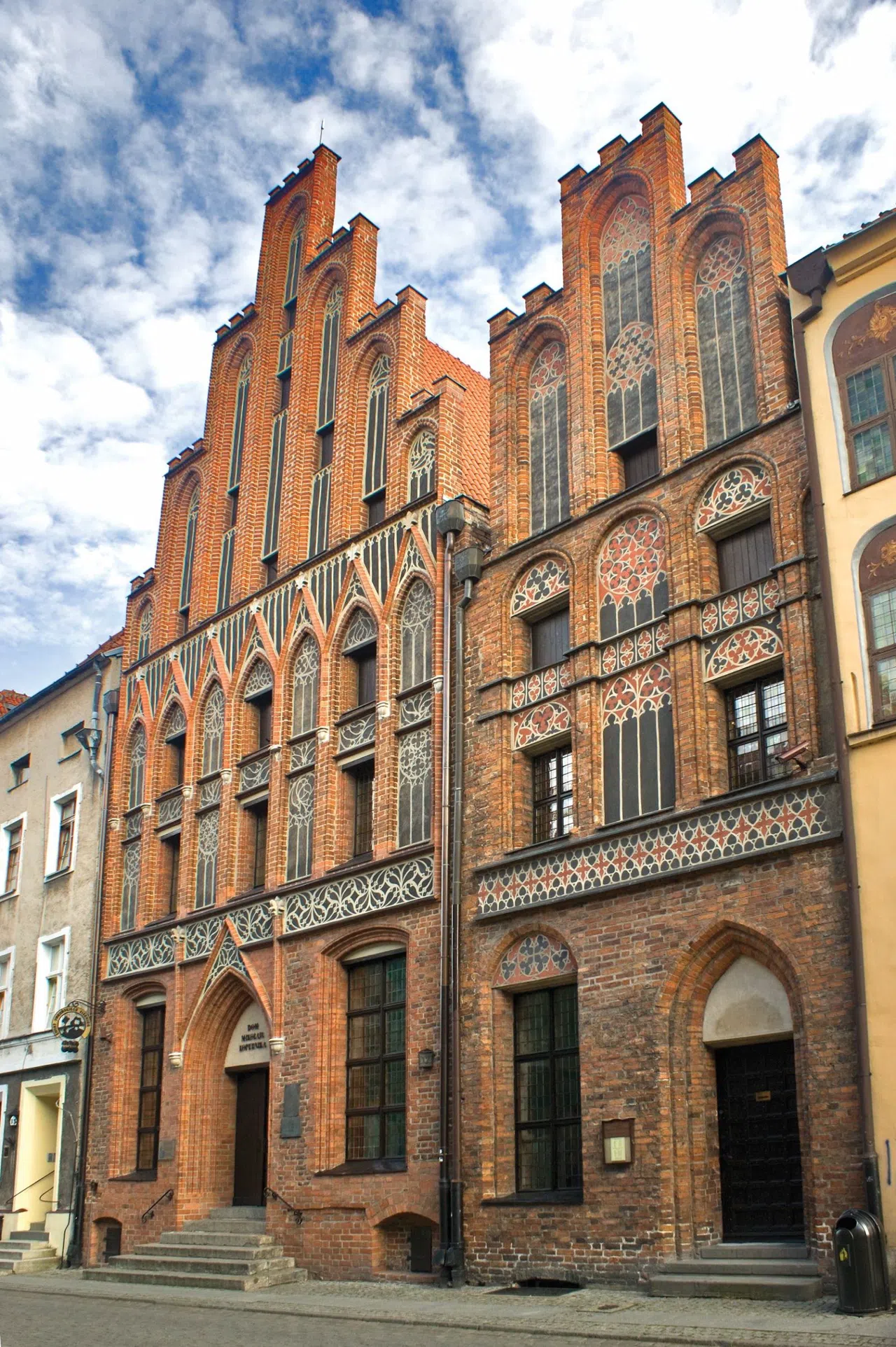

Nicolaus Copernicus never left a diary of his boyhood, but he did not need to — the streets of Toruń still hold the shape of the world he was born into. Walk the brick lanes between the Vistula and the Old Town Square on a grey Baltic morning and you are tracing, almost exactly, the route a merchant's son named Mikołaj Kopernik would have walked to church, to school, and eventually into a body of astronomical work that quietly rearranged the universe. This is that walk — not a museum crawl, but a route through the Hanseatic city that built him.
The House on Kopernika Street
Start at the beginning, literally. Nicolaus Copernicus House Museum (Dom Kopernika), on ul. Kopernika in the heart of the Old Town, occupies the Gothic tenement traditionally identified as the astronomer's birthplace — a tall, brick-gabled merchant's house of the kind that made fifteenth-century Toruń one of the wealthier towns on the Hanseatic trading network. The family fortune, built on copper, is written into the building's proportions: this was never a modest home. Today it's a purpose-built museum on Copernicus's life and the Copernican model of the cosmos, and it is the only sensible place to open the walk, since everything that follows makes more sense once you've stood in the rooms — reconstructed, but grounded in the real footprint — where he was, by tradition, born in 1473.
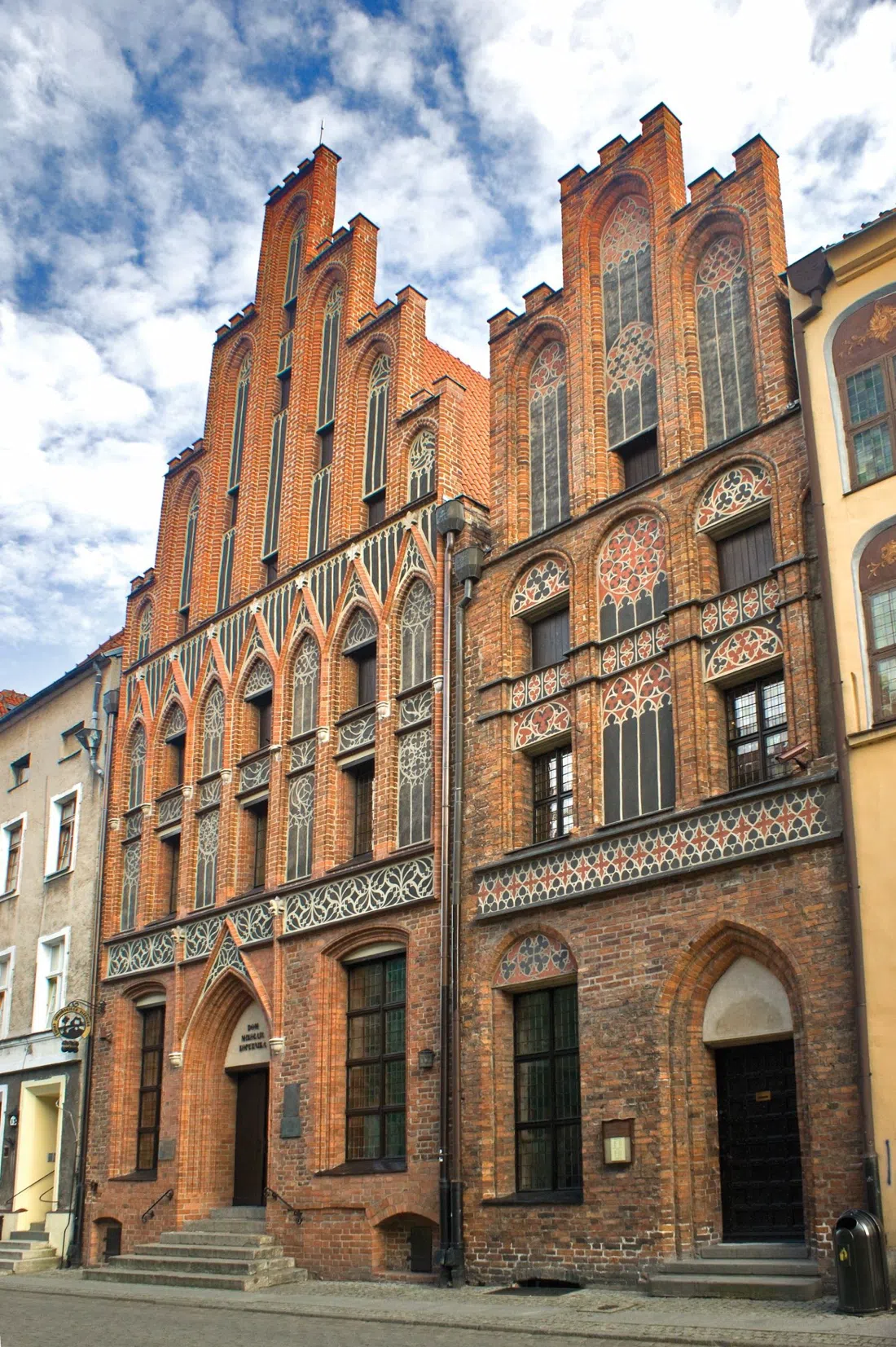
Admission runs about 31 PLN for adults and 26 PLN reduced for the core exhibition, and entry is free on Thursdays if you can time a visit that way. The museum is well set up for organised groups and school parties, and if you're travelling with one, book English-language guided or reservation slots ahead through [email protected] — peak season (roughly May to September) fills the good slots quickly. Couples and solo travellers can generally walk in and go at their own pace, but arriving right at opening avoids the worst of the coach-tour crush.
Baptism, Streets, and a Tower You Can't Climb
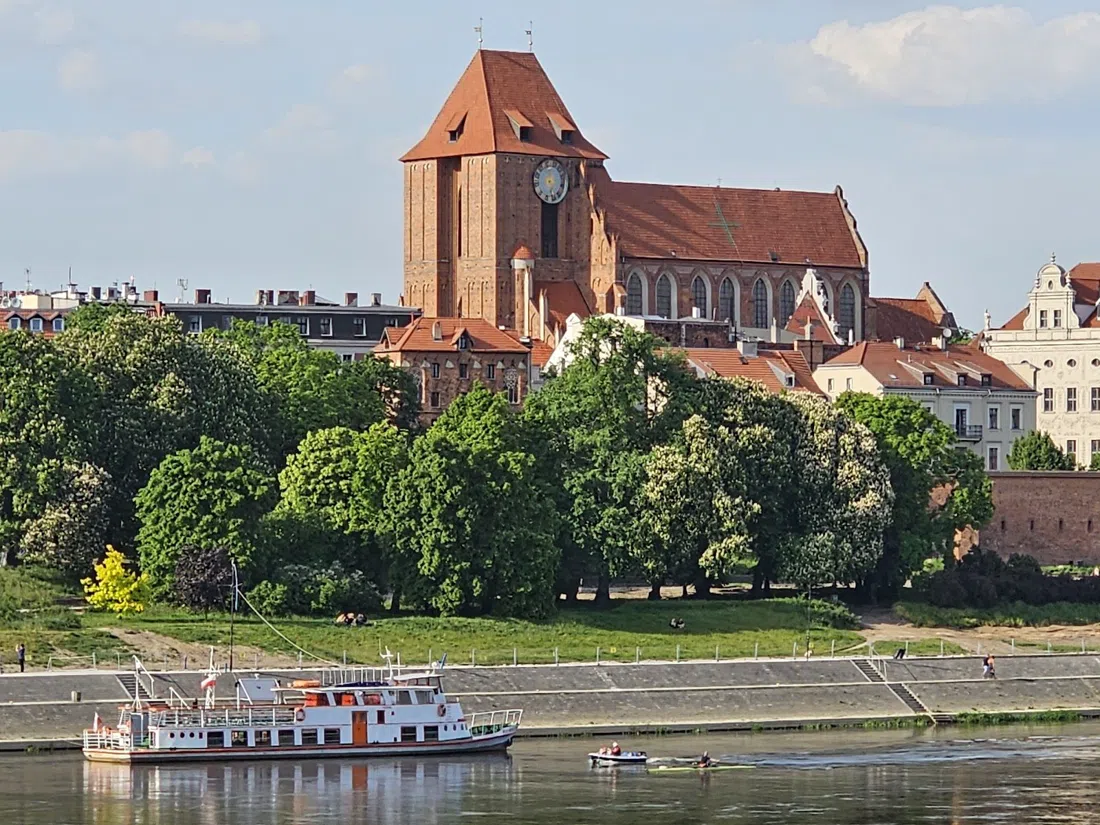
From Kopernika Street, the boy's actual daily geography takes over. The Cathedral Basilica of St John the Baptist and St John the Evangelist, a short walk south through the Old Town toward the river, is arguably the single most direct site on this entire trail: this is where the infant Copernicus was baptised, in a font that still stands in the nave. The nave itself is free to enter and open to groups, which makes it an easy, unhurried stop — no ticketing gymnastics, no timed entry. The tower is a different matter: it's ticketed separately, at roughly 20 PLN for adults and 15 PLN reduced, and the climb is a genuine 200-plus steps, so if you're leading a larger party, it's worth arranging the tower ascent in advance rather than queuing on the day. The reward at the top is the best available orientation to the rest of the walk — the whole medieval street grid Copernicus grew up inside, laid out below you in brick and red tile.
Walking from the cathedral back into the lanes, you'll pass the Leaning Tower (Krzywa Wieża), a fragment of the Old Town's thirteenth-century defensive walls, tilted — depending on who's explaining it — by unstable subsoil or, in local legend, by the guilt of the Teutonic Knight who built it. Be clear with anyone you're travelling with: this is an exterior stop only. The interior now houses city cultural offices and a small café, and it isn't open to the public in the way a typical tower attraction is, so don't build in time for a climb that isn't on offer. It costs nothing to view and photograph, and it sits directly on the route the young Copernicus would have used between the family house and the old town walls — a genuinely lived-in fragment, not a reconstruction.
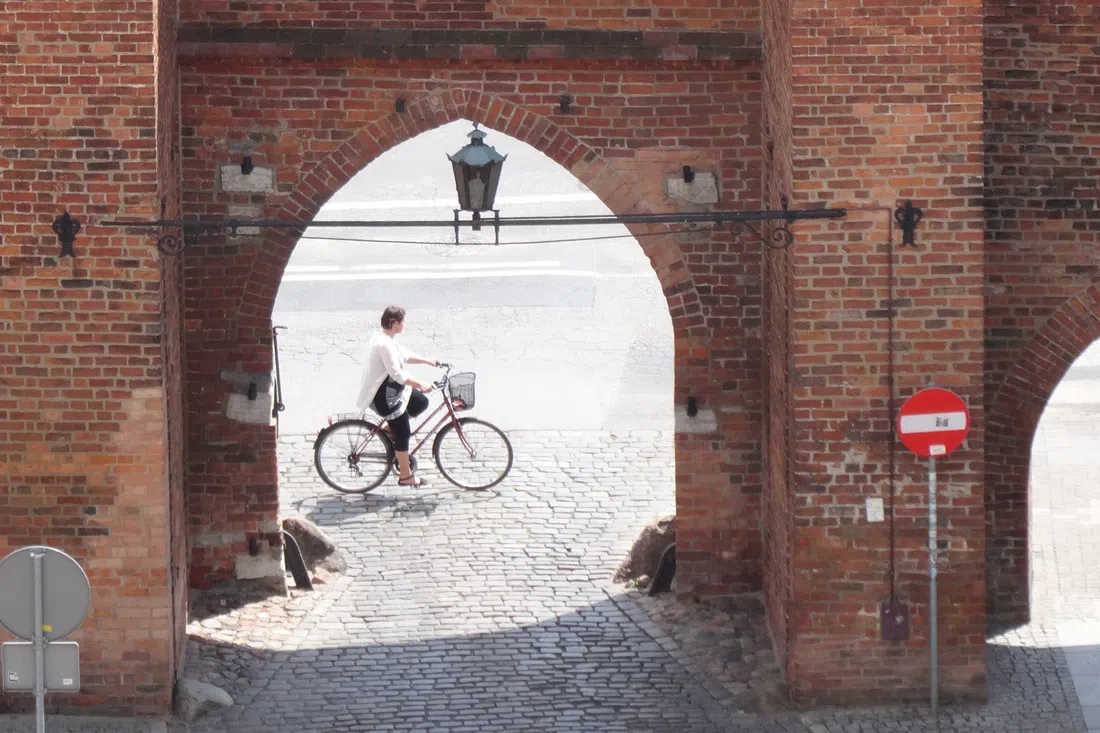
Continue toward the river and you reach the Sailor's Gate (Brama Żeglarska), on the Old Town's southern edge, one of the most atmospheric surviving breaks in Toruń's medieval fortifications. This was where Hanseatic merchant ships — and, on occasion, Polish kings — entered the city from the Vistula. It's a fully open public thoroughfare with no restrictions on groups, and it's worth pausing under the brickwork for a moment rather than walking straight through: this gate is effectively the seam between the trading city Copernicus's father worked in and the residential lanes the family lived in.
The River That Paid For It All
Beneath the gate, the Bulwar Filadelfijski & the Vistula city walls, the riverside promenade running along the Old Town's southern flank, is where the abstract idea of "Hanseatic wealth" becomes physically legible. This was the working river frontage — the actual quay — that made the Copernicus family's copper-trading fortune possible in the first place, and by extension made possible the education, the leisure, and the intellectual freedom that eventually produced De revolutionibus. It's a fully open, free public boulevard, easy for groups of any size, and in the warmer months seasonal open-air cafés and bars operate along it, making it a natural place to break the walk with a coffee or a beer and let the history settle before heading back into the Old Town core.
The Square and the Guildhall
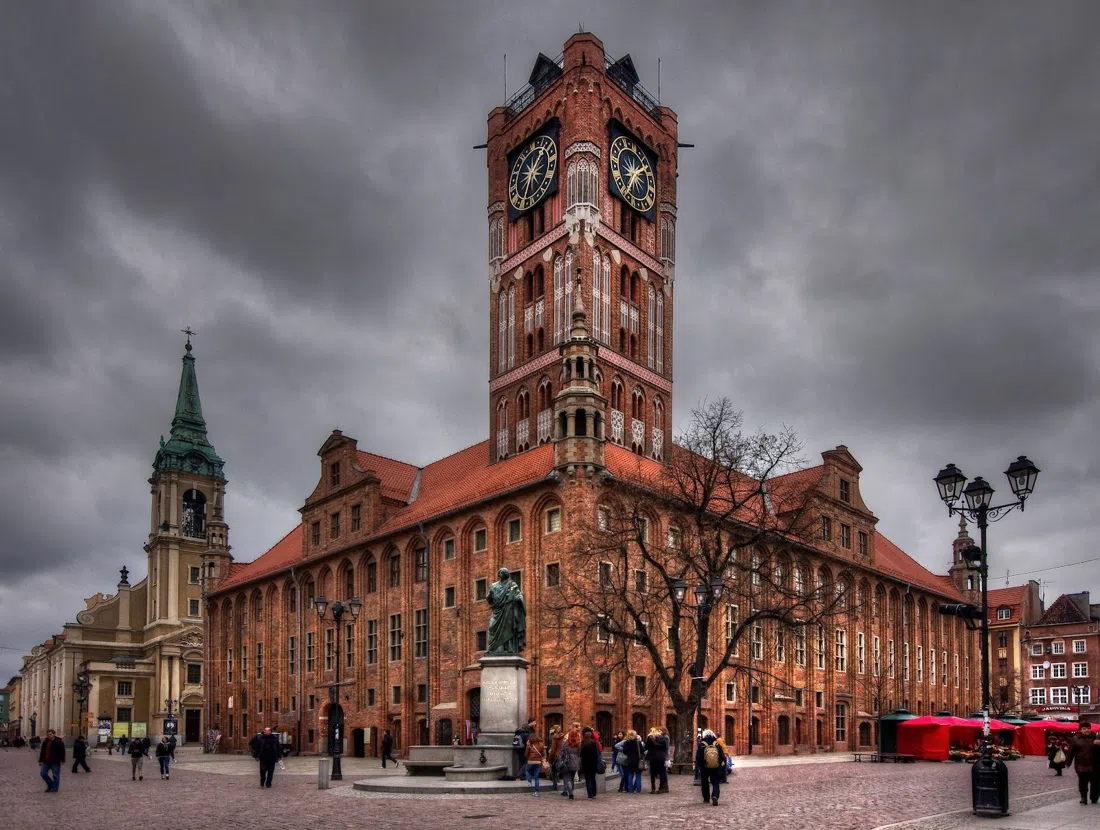
Back up from the river, the trail's civic heart is the Old Town Square, and two buildings here matter more than any others. The Old Town Hall / District Museum (Ratusz Staromiejski), dominating the square itself, is the physical seat of the Hanseatic civic power the Copernicus family — his father a wealthy copper trader, his maternal uncle eventually a prince-bishop — would have known intimately, whether through business, taxation, or simple neighbourly presence. It regularly hosts group and school tours, and the permanent exhibition is free to enter on Wednesdays; otherwise expect around 30 PLN for the exhibition and 28 PLN for the tower, with reduced rates available. Climb the tower here as well as, or instead of, the cathedral's — the panorama from the Ratusz is the one that frames the whole walk you've just done, roofline by roofline.
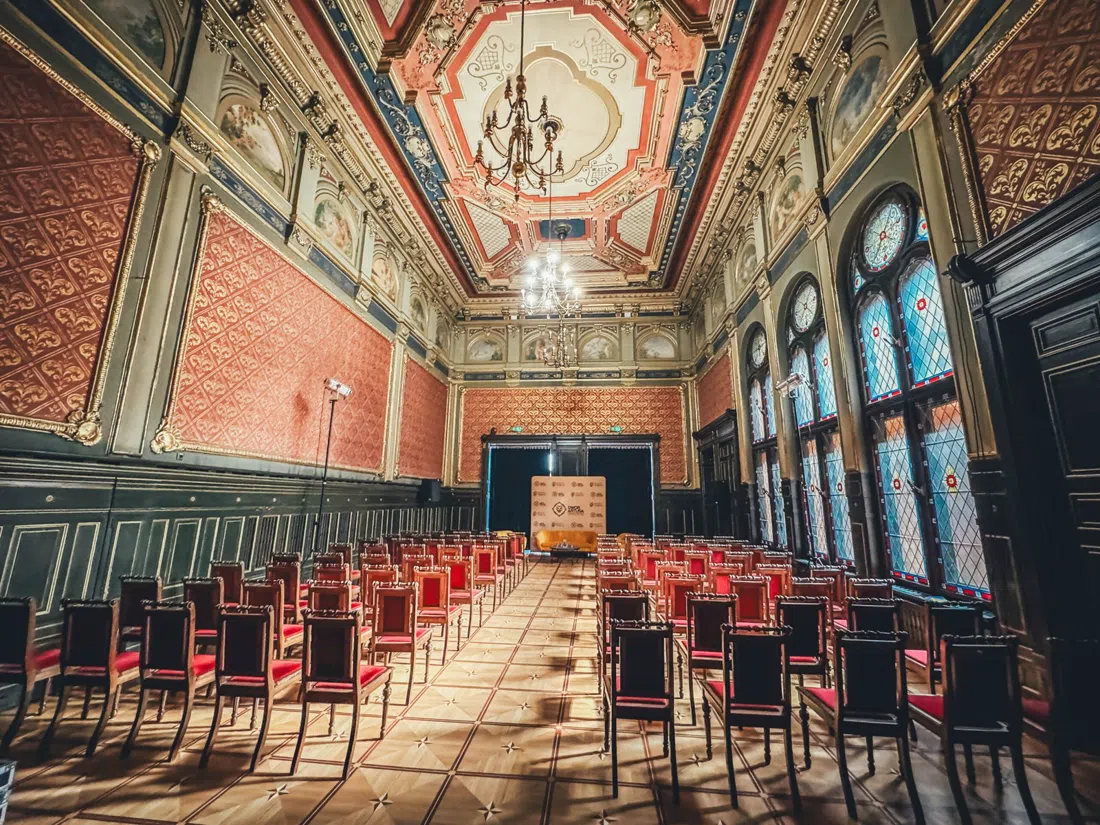
A short walk from the square, the Artus Court (Dwór Artusa) marks the site of the medieval merchants' guildhall that stood at the centre of the Hanseatic trading world Copernicus's family belonged to. The building you see today is nineteenth-century rather than Gothic — worth saying plainly, since it's easy to assume otherwise — but it functions as a genuine public cultural centre, open to groups for exhibitions and events, with the exterior and lobby free to view. Check the current programme before building in a visit; ticketed exhibitions and events vary through the year.
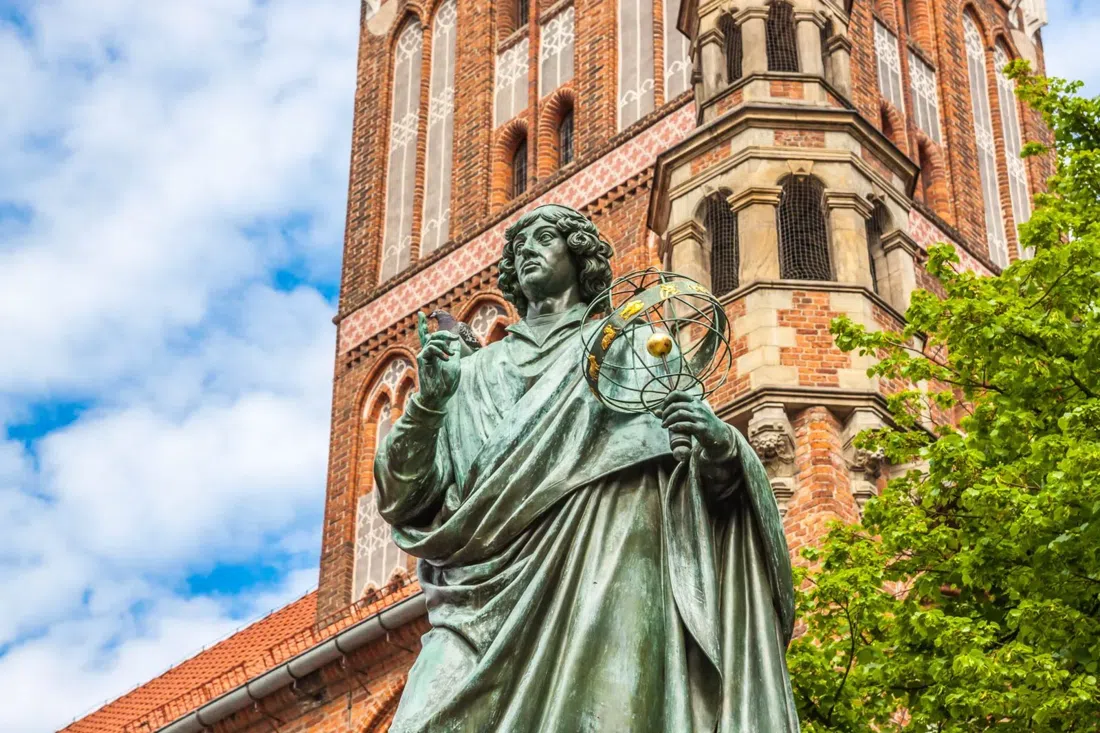
And then there's the payoff shot: the Nicolaus Copernicus Monument, standing in the Old Town Square itself, unrestricted public access, free, day or night. The Latin inscription — terrae motor, solis caelique stator, "he moved the Earth and stopped the Sun" — makes the connection between the man and the city about as explicit as a monument can. It's the natural climax of the walk and, practically speaking, the easiest group photo stop on the whole route: open square, no ticketing, no closing time to work around.
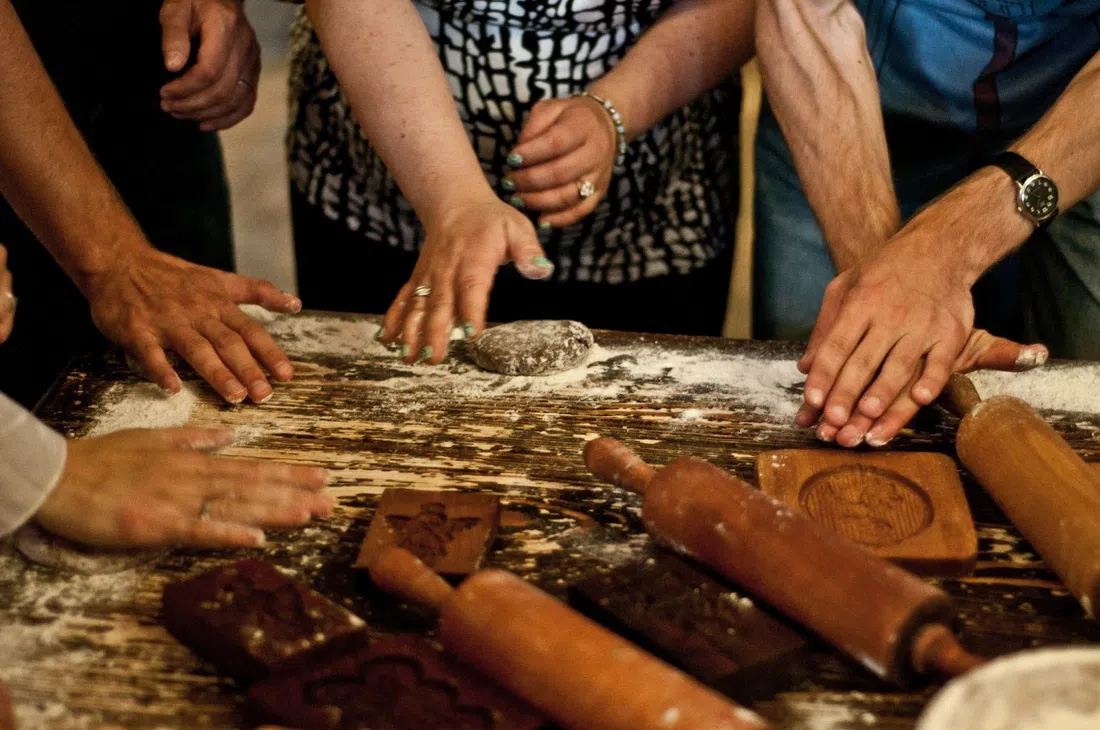
Steps from the monument, the Living Museum of Gingerbread (Żywe Muzeum Piernika), just off the Old Town Square, offers a change of register — hands-on rather than contemplative. Toruń's Hanseatic-era gingerbread trade is the other pillar of the city's "medieval merchant town" story, sitting alongside copper and cloth, and this is where it becomes tangible: interactive shows run on the hour, with visitors baking their own gingerbread under a costumed guide. It actively caters to groups, with a dedicated group booking line and email, and it's a genuinely good decompression stop if you've got children or a school party who've had enough of plaques and statues for one afternoon. Expect roughly 26–33 PLN per adult, with group rates available on request.
Into the New Town, and Under the Dome
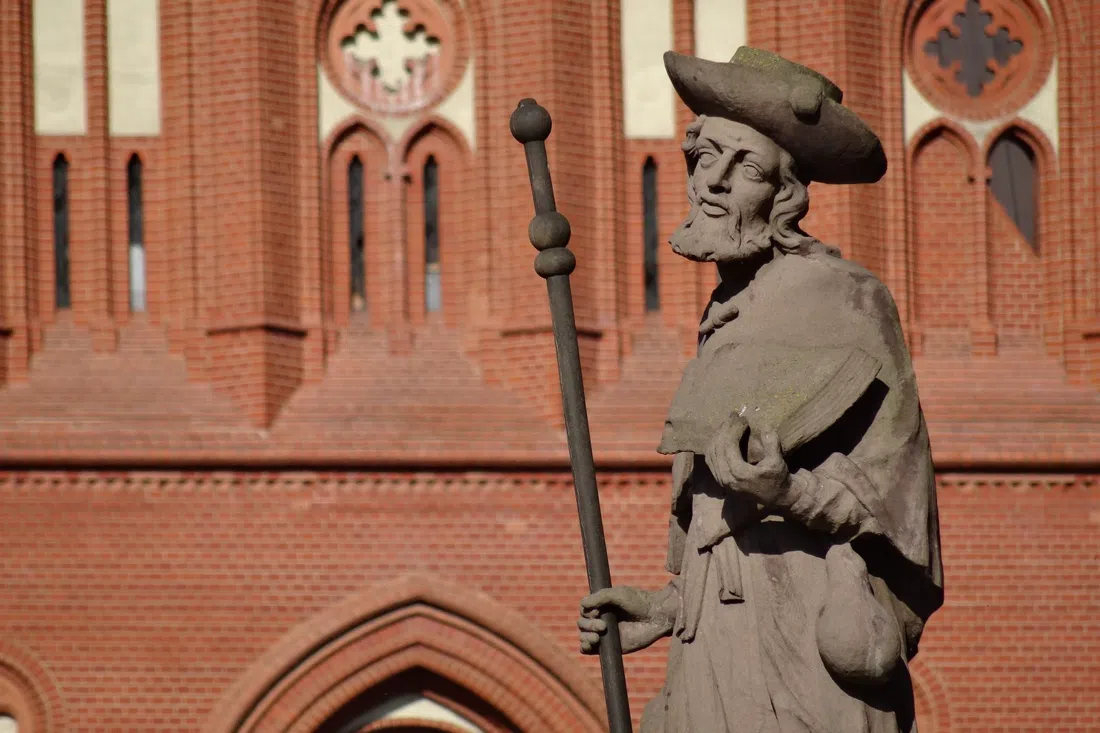
Most of Copernicus's Toruń is contained within the Old Town walls, but two worthwhile detours sit just outside them. The Church of St James (Kościół św. Jakuba), on the New Town Square, is widely considered the most beautiful Gothic church in the city — a taller, more soaring building than the cathedral, built for the New Town's own guild-driven prosperity rather than the Old Town's. It's open to the public and to groups outside service times, free of charge, and the short walk across into the New Town rounds out the texture of Copernicus's boyhood city: this was not a single quarter but two linked towns, each with its own market square, church, and merchant class.
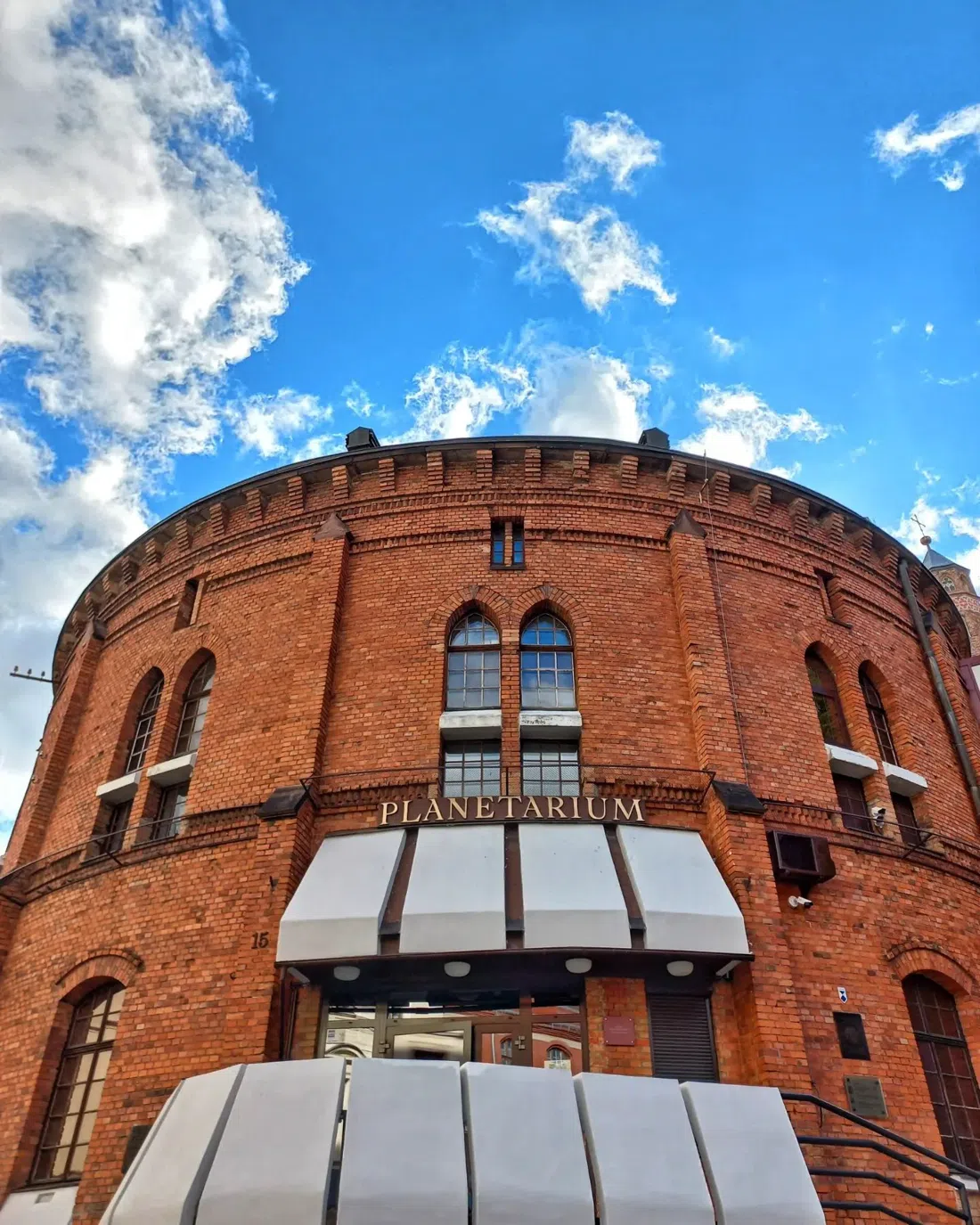
The other detour is a deliberate anachronism, and works precisely because of it: the Toruń Planetarium, a short walk from the Old Town on the edge of the park ring that now traces the old fortifications. There's something quietly satisfying about ending a walk through Copernicus's physical, medieval city under a modern dome built to project the model he spent decades working out on paper — the heliocentric solar system, rendered as a show rather than an argument. It's a good, unmissable coda, particularly for anyone travelling with children, and it regularly hosts school parties, with a dedicated group booking line (56 622 60 66). Ticket prices vary by show, typically in the 20–25 PLN range for adults — check the current schedule before you go, since programming rotates.
Walking It With Someone Who Knows the Streets
If you'd rather have the trail narrated than self-guide it with a map and this article, Walkative! — Scientific Toruń Free Walking Tour runs exactly this kind of route: small groups, capped at around seven people, in a pay-what-you-wish format that suits solo travellers and couples as easily as families. It's worth booking ahead in season, both because the small-group cap fills up and because a good local guide will fold in the sort of civic and family detail — who the Copernicus in-laws were, how the town council actually worked — that's hard to get from plaques alone.
Planning the Walk: Transport, Cash, and Timing
Toruń's Old Town is compact and entirely walkable — the whole route above covers perhaps 3–4 kilometres if you include the New Town detour, and most of it runs along pedestrianised or lightly trafficked cobbled lanes, so there's no need for taxis or trams once you're inside the walls. The nearest airport with international connections is around 45 minutes away by road, and a direct rail line also serves the Old Town's own station, which is the more common way in for most visitors. If you're basing yourself here for a few days to do the walk properly rather than rush it, a Torun hotel search turns up options right around the Old Town Square, within a few minutes of every site on this route.
Carry cash. Polish złoty (PLN) is still the default for smaller museum kiosks and the gingerbread workshop, and while cards are increasingly accepted at the larger sites, a Wednesday or Thursday free-entry visit or a small tower ticket is often easier paid in notes and coins. Budget roughly 150–200 PLN per person for a full day covering the House Museum, one tower climb, the Gingerbread Museum, and a planetarium show — considerably less if you time your visits around the free Wednesday and Thursday exhibition slots at the Town Hall and House Museum respectively.
Give the walk a full day if you want to do it properly, or a long half-day if you're moving briskly and skipping the planetarium. Spring and early autumn are the kindest seasons for walking the cobbles without either summer coach-tour crowds or winter ice underfoot, though the Old Town's brick façades have their own quiet appeal under snow. For the fuller picture of the city beyond this one trail — where to eat, where to stay, what else is worth the detour — the Torun guide covers the rest.